
Choosing the right lens is just as important as choosing the camera. Understand the differences between prime, zoom, wide-angle, portrait, macro, and telephoto lenses to find the best option for your photography journey. Buying your first interchangeable-lens camera is exciting, but choosing your first lens can be overwhelming. Walk into any camera store or browse online, and you’ll find dozens of options—kit lenses, prime lenses, zoom lenses, wide-angle lenses, telephoto lenses, macro lenses, and more. For a beginner, it’s easy to wonder: which camera lens to buy for beginners?
The truth is that your lens has a bigger impact on your photography than your camera body. A high-quality lens can produce sharp, vibrant images even with an entry-level camera, while an expensive camera paired with a poor lens may not deliver the results you expect.
In this guide, we’ll explain the different types of camera lenses, what they do, and which one is best for beginners. Whether you own a Canon, Nikon, Sony, or another interchangeable-lens camera, this article will help you make a confident and informed decision.
Why Choosing the Right Lens Matters which camera lens to buy for beginners?
Many beginners spend most of their budget on the camera body and treat the lens as an afterthought. In reality, the lens determines how your images look by affecting sharpness, background blur, low-light performance, perspective, and overall image quality.
A good lens can help you:
- Capture sharper images
- Shoot better in low light
- Create beautiful background blur (bokeh)
- Focus faster and more accurately
- Improve color and contrast
- Unlock different photography styles
Unlike camera bodies, which become outdated every few years, quality lenses can last for many years and often work across multiple camera upgrades.
Camera Body vs Lens: Which Is More Important?
One of the biggest questions beginners ask is whether they should spend more on the camera or the lens.
In most situations, the lens is the better investment.
For example:
- An entry-level camera with a high-quality lens often produces better images than a professional camera paired with a basic kit lens.
- A good lens improves sharpness, color, autofocus speed, and low-light performance.
- Lenses retain their value much longer than camera bodies.
If you’re working with a limited budget, it’s usually smarter to buy a mid-range camera body and invest in a better lens.
Understanding Focal Length
Before choosing a lens, it’s important to understand focal length, measured in millimeters (mm). Focal length determines how much of a scene your camera captures and how close your subject appears.
Wide-Angle (10–24mm)
Wide-angle lenses capture a broad field of view, making them ideal for:
- Landscapes
- Architecture
- Travel
- Real estate
- Interior photography
They help fit more of the scene into a single frame.
Standard (35–70mm)
Standard focal lengths closely match the natural perspective of the human eye.
They’re perfect for:
- Everyday photography
- Street photography
- Travel
- Family photos
A 50mm lens is one of the most popular standard lenses for beginners.
Telephoto (70mm and Above)
Telephoto lenses bring distant subjects closer.
Ideal for:
- Wildlife
- Sports
- Birds
- Concerts
- Events
They also create pleasing background compression, making subjects stand out.
Understanding Aperture
Aperture refers to the opening inside the lens that controls how much light reaches the camera sensor.
It’s expressed as f-numbers, such as:
- f/1.8
- f/2.8
- f/4
- f/5.6
Wide Aperture (Small f-number)
Examples:
- f/1.4
- f/1.8
- f/2
Benefits:
- Better low-light performance
- Beautiful blurred backgrounds
- Faster shutter speeds
- Ideal for portraits
Narrow Aperture (Large f-number)
Examples:
- f/8
- f/11
- f/16
Benefits:
- Greater depth of field
- More of the scene stays in focus
- Excellent for landscapes and architecture
As a beginner, you’ll quickly notice how aperture changes the look and feel of your photos.
Types of Camera Lenses
There are many types of lenses, but beginners only need to understand a few key categories.
Kit Lens Explained
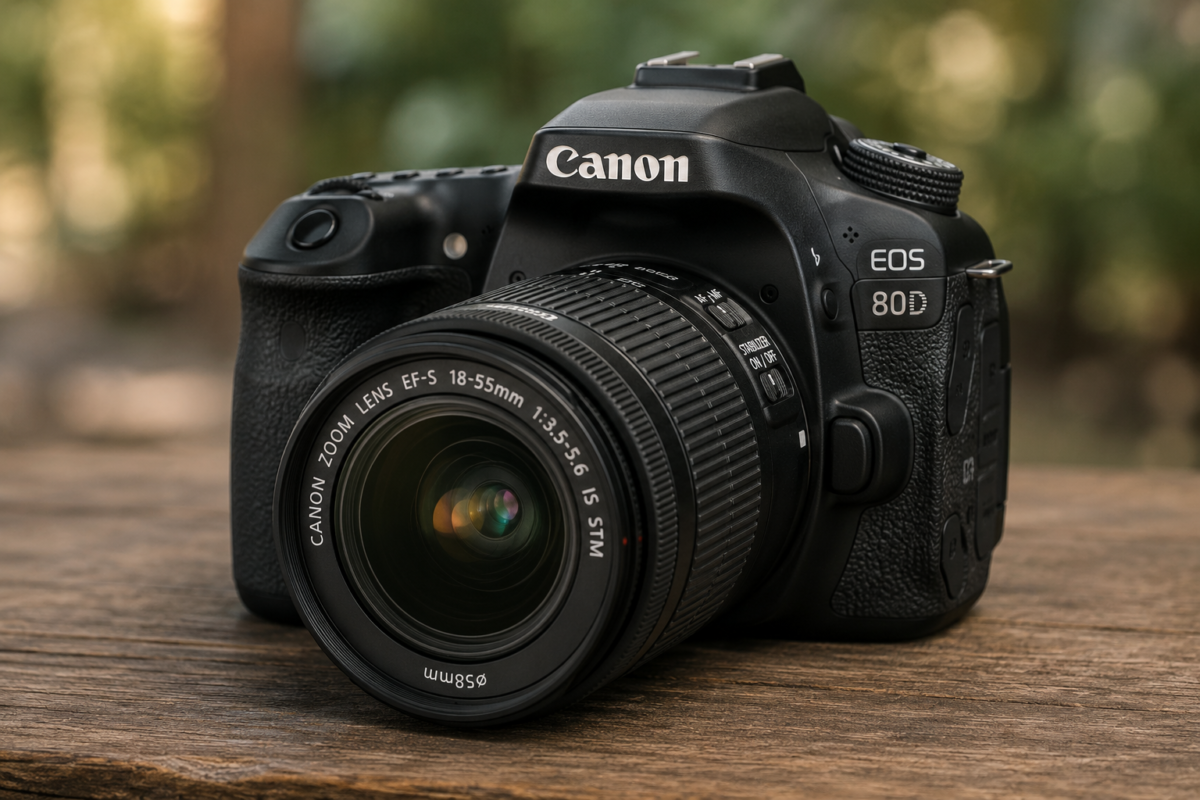
A kit lens is the lens typically included with most entry-level DSLR or mirrorless cameras.
The most common kit lens is:
18–55mm (APS-C cameras)
This zoom range makes it suitable for a variety of everyday situations.
Advantages
- Affordable
- Lightweight
- Versatile
- Great for learning photography
- Covers wide-angle to short telephoto
You can photograph:
- Family
- Travel
- Landscapes
- Street scenes
- Everyday moments
Limitations
- Smaller maximum aperture
- Limited background blur
- Average low-light performance
- Less sharp than premium lenses
Even with these limitations, a kit lens is an excellent starting point for beginners who want to learn different photography styles before investing in specialized lenses.
Prime Lens Explained
A prime lens has a fixed focal length, meaning it cannot zoom in or out.
Popular examples include:
- 35mm
- 50mm
- 85mm
Instead of zooming, you move closer to or farther from your subject.
Advantages
- Exceptional sharpness
- Large aperture (often f/1.8 or wider)
- Beautiful background blur
- Better low-light performance
- Lightweight design
The 50mm f/1.8, often called the “Nifty Fifty,” is one of the best first upgrades for beginners. It’s affordable, easy to use, and produces professional-looking portraits with soft, blurred backgrounds.
Best For
- Portraits
- Food photography
- Street photography
- Indoor photography
- Everyday shooting
Limitations
- No zoom capability
- Requires moving to change composition
While this may seem restrictive at first, it helps beginners improve composition and framing skills.
Zoom Lens Explained
A zoom lens allows you to change focal length without changing lenses.
Examples include:
- 18–135mm
- 24–70mm
- 70–200mm
This flexibility makes zoom lenses extremely popular.
Advantages
- Versatile
- Convenient for travel
- Covers multiple focal lengths
- Fewer lens changes
- Great for events
Best For
- Travel photography
- Wildlife
- Sports
- Family events
- Weddings
Limitations
- Larger and heavier
- Usually more expensive
- Smaller maximum aperture compared to prime lenses
- Premium zoom lenses can be costly
For beginners who don’t want to carry multiple lenses, a zoom lens is often the most practical choice.
Prime Lens vs Zoom Lens: Which Is Better for Beginners?
This is one of the most common questions among new photographers.
A prime lens offers better image quality, wider apertures, and stronger background blur, making it ideal for portraits and low-light photography.
A zoom lens, on the other hand, provides greater flexibility because it covers multiple focal lengths without requiring you to change lenses.
If your goal is to improve photography skills and achieve professional-looking portraits, a 50mm f/1.8 prime lens is one of the best investments you can make.
If you mainly shoot while traveling, attending events, or capturing everyday moments, an 18–135mm or similar zoom lens offers far more convenience.
Ultimately, there’s no universal winner. The best choice depends on what you enjoy photographing and how you plan to use your camera.
Wide-Angle Lens
Wide-angle lenses are designed to capture a broader field of view than standard lenses. They’re ideal when you want to include more of a scene in a single frame.
Typical focal lengths:
- 10–24mm (APS-C)
- 16–35mm (Full Frame)
Best For
- Landscape photography
- Architecture
- Real estate
- Travel
- Cityscapes
- Interior photography
Advantages
- Captures large scenes
- Makes small spaces appear bigger
- Great for dramatic perspectives
- Excellent for travel
Limitations
- Can distort faces if used too close
- Less suitable for portraits
Standard Lens
A standard lens closely matches the perspective of the human eye, making images appear natural.
Popular focal lengths:
- 35mm
- 50mm
Best For
- Street photography
- Daily photography
- Family photos
- Food photography
- Travel
Advantages
- Natural-looking perspective
- Lightweight
- Sharp image quality
- Great in low light (especially prime lenses)
The 50mm f/1.8 is widely considered the best first lens upgrade for beginners due to its excellent image quality and affordable price.
Telephoto Lens
Telephoto lenses magnify distant subjects, allowing you to photograph subjects that are far away without physically moving closer.
Common focal lengths:
- 70–200mm
- 70–300mm
- 100–400mm
Best For
- Wildlife
- Birds
- Sports
- Concerts
- Events
- Outdoor portraits
Advantages
- Brings distant subjects closer
- Excellent subject isolation
- Beautiful background compression
Limitations
- Larger and heavier
- More expensive
- Requires faster shutter speeds
Telephoto lenses are generally not the best first purchase unless wildlife or sports photography is your primary interest.
Macro Lens
Macro lenses are designed for extreme close-up photography.
Most macro lenses offer 1:1 magnification, meaning the subject is reproduced on the camera sensor at life size.
Best For
- Flowers
- Insects
- Jewelry
- Product photography
- Textures
- Food details
Advantages
- Incredible detail
- Extremely sharp images
- Excellent close-focusing ability
Limitations
- Specialized purpose
- Slower workflow
- Not ideal as a first lens for most beginners
Portrait Lens
Portrait photography is one of the most popular genres among beginners.
The best portrait lenses usually have:
- Large aperture
- Excellent sharpness
- Smooth background blur
Popular portrait focal lengths:
- 50mm
- 85mm
Why They’re Great
Portrait lenses create:
- Soft, creamy background blur (bokeh)
- Flattering facial proportions
- Better subject separation
- Excellent low-light performance
If you’re interested in portrait photography, a 50mm f/1.8 is one of the best-value lenses available.
Travel Lens
Travel photographers often prefer carrying just one lens.
Popular travel zooms include:
- 18–135mm
- 18–140mm
- 18–150mm
- 24–105mm
Advantages
- Covers multiple focal lengths
- Reduces lens changes
- Convenient for vacations
- Great all-around performance
These lenses allow you to shoot landscapes, portraits, architecture, and street photography without constantly switching lenses.
Which Lens Is Best for Different Photography Styles?
Different photography genres require different lenses.
Landscape Photography
Recommended:
- Wide-angle zoom
- Ultra-wide lens
Best focal lengths:
- 10–24mm
- 16–35mm
Portrait Photography
Recommended:
- 50mm Prime
- 85mm Prime
Large apertures create attractive background blur and flattering portraits.
Wildlife Photography
Recommended:
- 70–300mm
- 100–400mm
- 150–600mm
Long focal lengths help capture distant animals without disturbing them.
Sports Photography
Recommended:
- 70–200mm
- 100–400mm
Fast autofocus and long reach are essential.
Street Photography
Recommended:
- 35mm Prime
- 50mm Prime
Compact lenses make shooting discreet and comfortable.
Travel Photography
Recommended:
- 18–135mm
- 24–105mm
One versatile zoom lens is often enough for an entire trip.
Food Photography
Recommended:
- 50mm Prime
- Macro Lens
Large apertures and close-focusing ability help create attractive food images.
Best Canon Lenses for Beginners
Canon offers excellent entry-level lens options for both DSLR and mirrorless users.
Canon RF 50mm f/1.8 STM
Perfect for:
- Portraits
- Street photography
- Low-light photography
One of the best-value RF lenses.
Canon RF-S 18–150mm
Excellent travel zoom for APS-C mirrorless cameras.
Ideal for:
- Travel
- Family
- Landscapes
- Everyday use
Canon EF 50mm f/1.8 STM
Still one of the most recommended DSLR lenses for beginners.
Affordable, sharp, and lightweight.
Best Nikon Lenses for Beginners
Nikon Z 40mm f/2
Excellent for:
- Portraits
- Daily photography
- Street photography
Compact and budget-friendly.
Nikon Z DX 16–50mm
A great kit lens offering impressive sharpness and portability.
Ideal for beginners using Nikon Z APS-C cameras.
Nikon AF-S 50mm f/1.8G
One of Nikon’s most popular DSLR lenses.
Excellent value and beautiful image quality.
Best Sony Lenses for Beginners
Sony’s E-mount ecosystem offers a wide range of beginner-friendly lenses.
Sony FE 50mm f/1.8
Perfect for:
- Portraits
- Street photography
- Low-light shooting
Affordable and lightweight.
Sony E 18–135mm OSS
An excellent all-in-one travel zoom.
Suitable for:
- Landscapes
- Portraits
- Travel
- Everyday photography
Sony E 35mm f/1.8 OSS
A fantastic everyday prime lens with image stabilization.
Ideal for beginners looking to improve image quality and low-light performance.
Which Lens Should You Buy First?
For most beginners, these are the safest recommendations:
If you own the standard kit lens
➡️ Buy a 50mm f/1.8 Prime.
If you travel frequently
➡️ Buy an 18–135mm travel zoom.
If you love portraits
➡️ Choose a 50mm or 85mm prime lens.
If you enjoy landscapes
➡️ Invest in a wide-angle lens.
If you’re interested in wildlife
➡️ Start with a 70–300mm telephoto lens.
Instead of buying multiple inexpensive lenses, invest in one high-quality lens that matches your photography style. A good lens will improve your images far more than upgrading your camera body.
Prime Lens vs Zoom Lens: Which Should You Choose?
This is one of the biggest decisions every beginner faces. Both lens types have their advantages, and the right choice depends on your photography style.
| Feature | Prime Lens | Zoom Lens |
|---|---|---|
| Focal Length | Fixed | Variable |
| Image Quality | Excellent | Very Good to Excellent |
| Background Blur | Outstanding | Good |
| Low-Light Performance | Excellent | Good |
| Flexibility | Low | High |
| Weight | Lightweight | Usually Heavier |
| Price | Often Affordable | Can Be Expensive |
| Best For | Portraits, Street, Low Light | Travel, Events, Wildlife |
Choose a Prime Lens If You:
- Want the sharpest images.
- Love portrait photography.
- Shoot indoors or in low light.
- Want beautiful background blur.
- Want an affordable upgrade from your kit lens.
Choose a Zoom Lens If You:
- Travel frequently.
- Shoot different subjects.
- Don’t want to change lenses often.
- Need maximum versatility.
For most beginners, the ideal combination is a kit zoom lens for everyday photography and a 50mm f/1.8 prime lens for portraits and low-light shooting.
Common Beginner Mistakes When Buying a Lens
Avoid these common mistakes to save money and choose the right lens.
1. Buying the Most Expensive Lens
Price doesn’t always equal the best choice. Buy a lens that suits your photography style instead of the most expensive model.
2. Ignoring Lens Compatibility
Not every Canon, Nikon, or Sony lens fits every camera.
Always check:
- Lens mount
- Sensor format (APS-C or Full Frame)
- Autofocus compatibility
3. Buying Too Many Lenses Too Soon
Many beginners purchase multiple lenses before understanding what they actually enjoy photographing.
Instead:
- Learn with your kit lens.
- Identify your favorite photography style.
- Upgrade accordingly.
4. Overlooking Weight and Size
Professional zoom lenses can be large and heavy.
If you travel frequently, a lighter lens may encourage you to carry your camera more often.
5. Ignoring Future Upgrades
Think about your long-term plans.
If you expect to upgrade within a few years, investing in lenses compatible with your future camera system can save money.
Camera Lens Buying Tips
Before buying any lens, ask yourself these questions:
What do I photograph most?
- Portraits
- Landscapes
- Wildlife
- Travel
- Sports
- Street photography
- Food
- Video
Choose a lens designed for your most common subjects.
What’s My Budget?
Remember to budget for:
- Lens filters
- Lens hood
- Camera bag
- Cleaning kit
- Extra battery
- Memory card
These accessories add to the total cost.
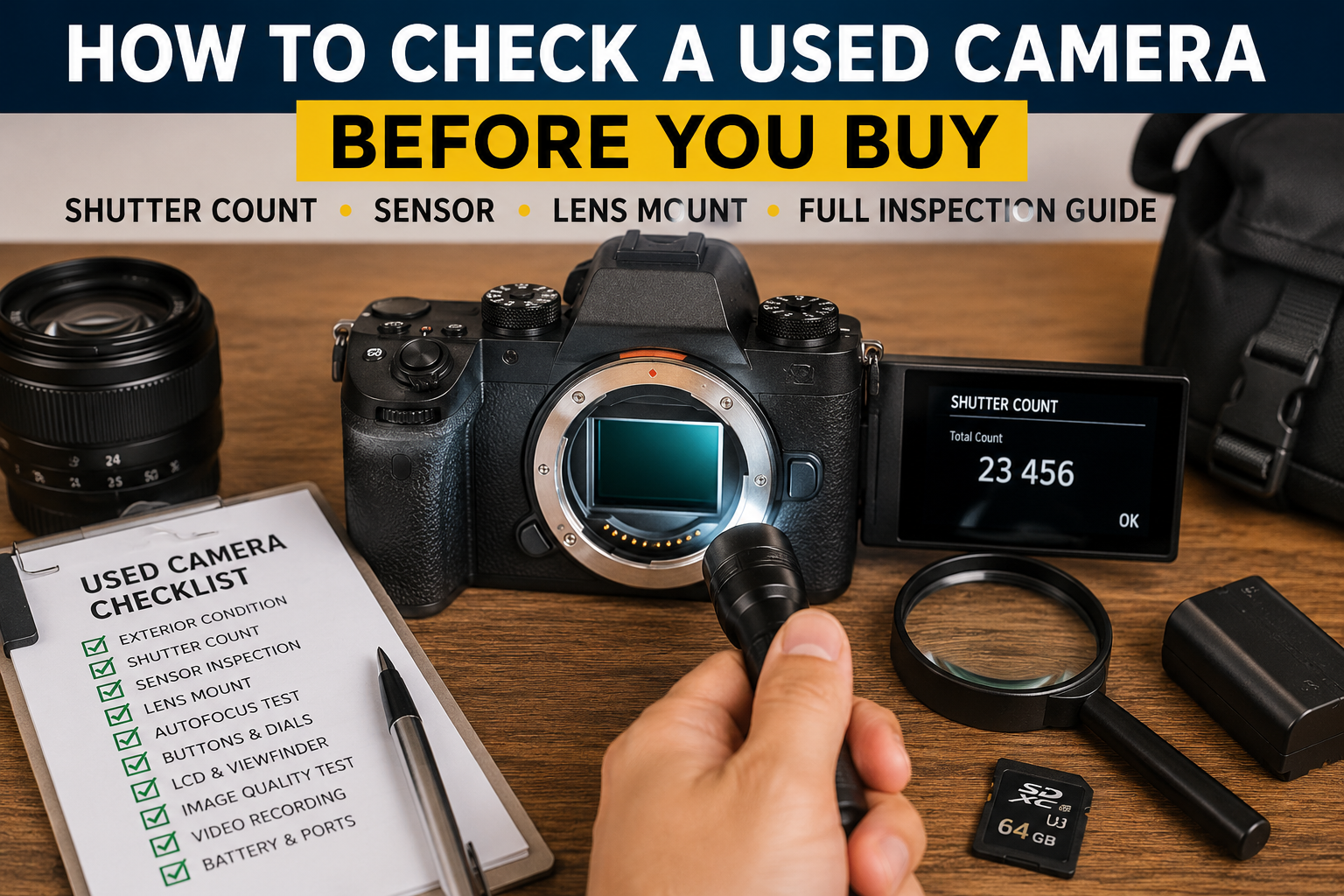
Should I Buy Used?
Buying a used lens from a trusted seller can save a significant amount of money.
Before purchasing, inspect the lens for:
- Scratches on the glass
- Fungus
- Dust inside the lens
- Autofocus performance
- Zoom and focus ring smoothness
- Mount condition
A well-maintained used lens often offers excellent value.
Pros and Cons of Popular Beginner Lenses
Kit Lens
Pros
- Affordable
- Lightweight
- Versatile
- Great for learning
Cons
- Smaller aperture
- Average low-light performance
- Limited background blur
Prime Lens
Pros
- Extremely sharp
- Excellent in low light
- Beautiful bokeh
- Lightweight
- Affordable (50mm f/1.8)
Cons
- Fixed focal length
- No zoom
Zoom Lens
Pros
- Highly versatile
- Great for travel
- Fewer lens changes
- Covers multiple focal lengths
Cons
- Larger and heavier
- More expensive
- Smaller maximum aperture (on many models)
Frequently Asked Questions (FAQs)
Which camera lens should a beginner buy first?
For most beginners, a 50mm f/1.8 prime lens is the best first upgrade. It’s affordable, sharp, performs well in low light, and creates beautiful background blur.
Is the kit lens good enough?
Yes. A kit lens is excellent for learning photography and covers many everyday situations. Upgrade only after you understand your preferred photography style.
Which lens is best for portraits?
A 50mm or 85mm prime lens is ideal for portraits because of its sharpness and ability to produce smooth background blur.
Which lens is best for travel?
An 18–135mm or 24–105mm zoom lens is a great travel companion because it covers a wide range of focal lengths without needing frequent lens changes.
Should I buy a prime or zoom lens first?
If you value versatility, start with a zoom lens. If your priority is image quality, portraits, and low-light photography, a prime lens is the better choice.
Can one lens do everything?
No single lens is perfect for every situation. However, an all-purpose zoom lens can handle most everyday photography, while additional specialized lenses can be added as your skills and interests grow.
Final Lens Buying Checklist
Before purchasing your first lens, make sure you can answer these questions:
- ✔️ Is the lens compatible with my camera mount?
- ✔️ Is it designed for APS-C or Full Frame?
- ✔️ Does it match my photography style?
- ✔️ Is it within my budget?
- ✔️ Do I need better low-light performance?
- ✔️ Will I travel with this lens?
- ✔️ Is the lens size and weight comfortable?
- ✔️ Have I checked reviews and sample images?
- ✔️ If buying used, have I inspected its condition?
Taking a few extra minutes to evaluate these points can help you make a smarter purchase.
Conclusion
Choosing which camera lens to buy for beginners doesn’t have to be complicated. The best lens isn’t the most expensive one—it’s the one that matches your photography goals and encourages you to shoot more often.
For most beginners, the kit lens is a great place to start because it offers versatility and helps you explore different photography styles. Once you gain confidence, upgrading to a 50mm f/1.8 prime lens is one of the best investments you can make. It delivers sharper images, excellent low-light performance, and beautiful background blur at an affordable price.
If travel is your priority, a versatile zoom lens like an 18–135mm or 24–105mm can replace multiple lenses and reduce the need for frequent lens changes. Wildlife photographers will benefit from a telephoto lens, while landscape photographers should consider a wide-angle option.
Ultimately, the right lens depends on what you enjoy photographing. Learn the basics, practice regularly, and invest in lenses that support your creative journey. A quality lens can stay with you through multiple camera upgrades and will often have a greater impact on your photography than a new camera body.